
A bay is three or more panels meeting at an angle, and each one needs its own blind. We measure every panel separately so the corners actually close.
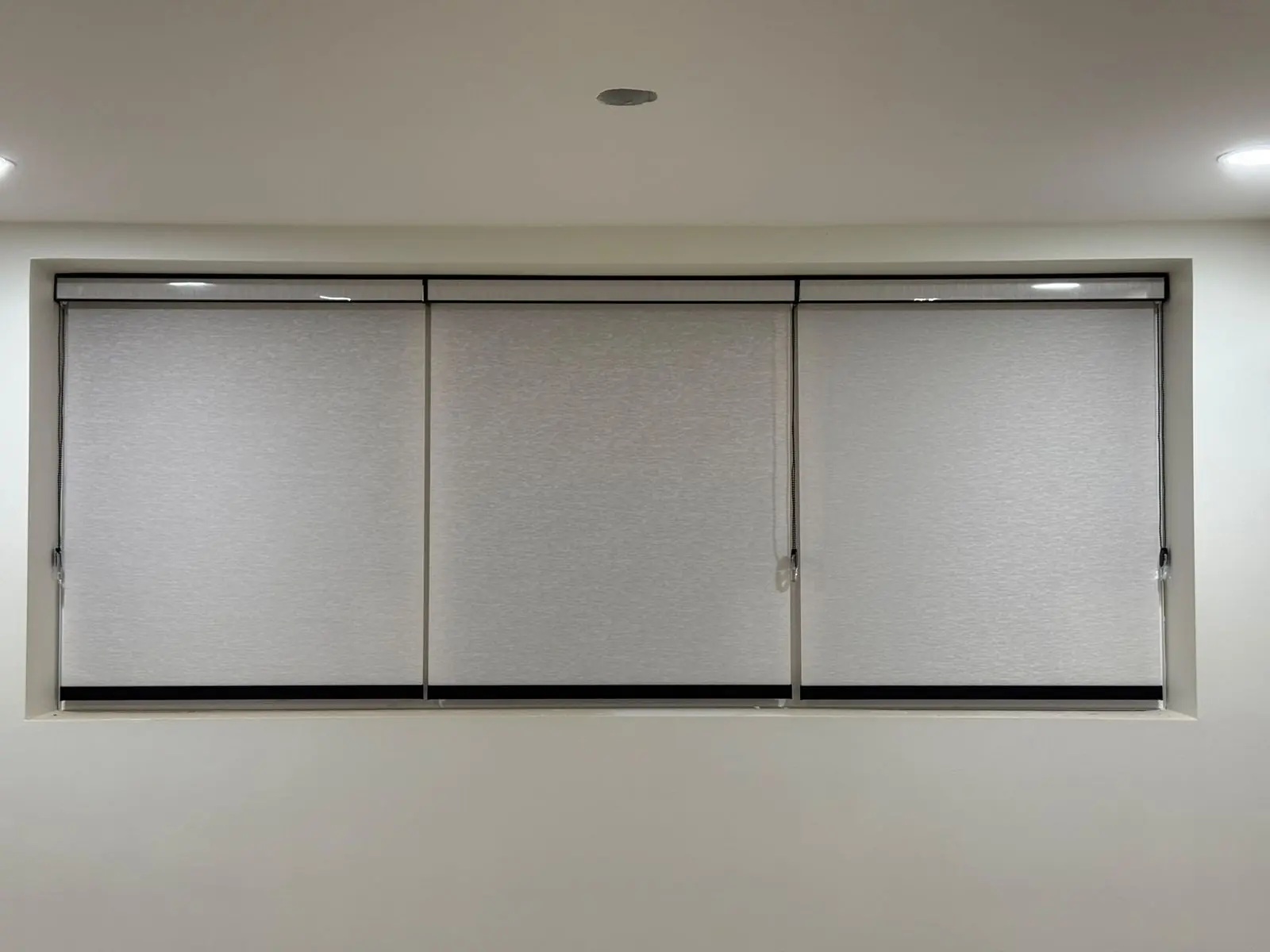
In short. A bay window is three or more windows set at angles to each other, projecting out from the wall. Because the panels meet at an angle rather than sitting flat, each one needs its own blind measured to its own width. Getting the corners right is what separates a good bay install from a bad one.
On a flat window you take one width and one drop. On a bay you take a width and a drop for every panel, plus the angle at each join. Those angles are rarely a neat 45 or 135 degrees, especially in older Winnipeg homes where the frames have shifted over decades. If the angle is assumed rather than measured, the blinds either collide at the corners or leave a wedge of light down the join.
A blind cannot bend. Every bay window is a set of separate blinds that happen to sit next to each other. What makes it read as a single window covering is that the headrails line up, the fabric matches across all of them, and the gaps at the corners are even.
The centre panel of a bay is usually wider than the two flanking it. That makes the centre blind heavier, and on a chain system it will feel different to operate than its neighbours. It is one of the more common reasons people motorize a bay: one button moves all three together, and nobody is reaching across a sofa to the far panel.
Wolseley, Crescentwood, Armstrong's Point and parts of St. Boniface have a lot of original bay windows in homes eighty years old or more. Those frames are almost never square, and the drop often differs by a centimetre or two between the left and right side of the same panel.
This is the situation where made to measure genuinely matters. An off the shelf blind trimmed to fit will show that discrepancy as a slanted gap along the bottom. We measure both sides of every panel and build to the real numbers.
If you have an older bay and someone has told you it cannot be done neatly, it usually can. The measuring just takes longer. Mention it when you book and we will allow extra time.
An inside mount sits the blind within the window reveal. It looks cleaner and keeps the sill usable, but it needs enough depth for the roller tube, and on a bay the depth is tightest exactly where the panels meet.
An outside mount fits to the face of the frame. It covers more glass and blocks more light at the edges, but on a bay it can look bulky because the frames already project at angles. We look at both at the measure and tell you which suits your specific bay rather than applying a rule.
Roller and zebra blinds are the usual choice, because they sit tight to the glass and take up very little depth at the corners. Drapery across a bay needs a curved or hinged track, which is possible but more involved. Shutters can be fitted to a bay and look excellent, though cost rises with every panel.
Real installations by our team. Tap any photo to view it full size.
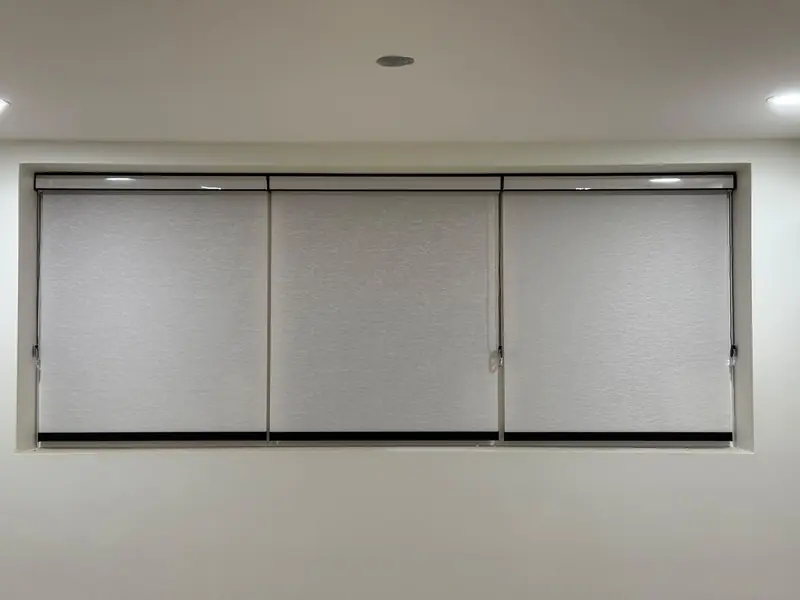 Bay Window Blinds
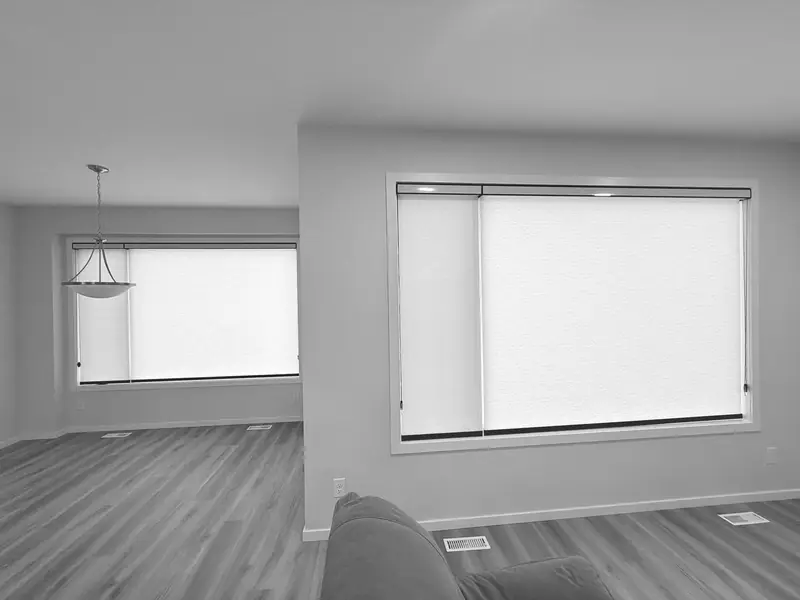 Bay Window Blinds
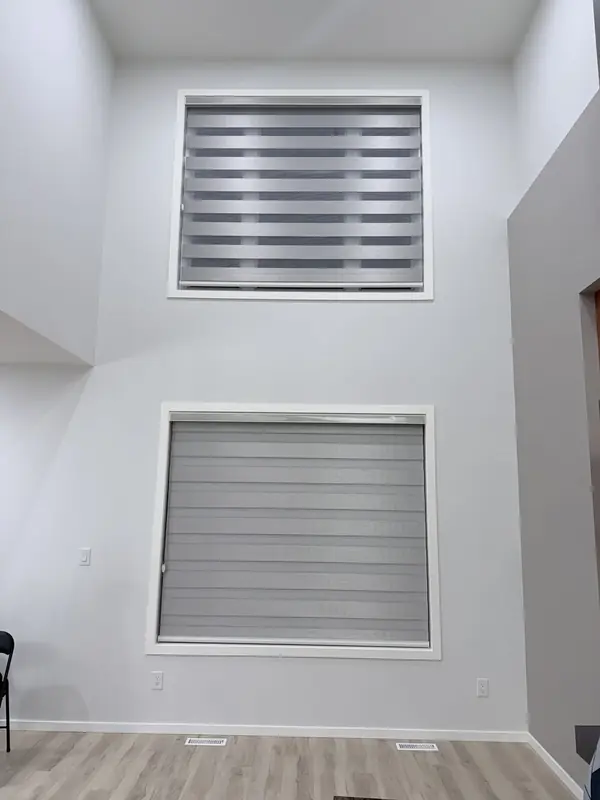 Bay Window Blinds
No, and neither can anyone else. A blind is rigid and a bay is angled, so every bay is a set of separate blinds sitting side by side. What makes it look like one covering is aligned headrails, matching fabric and even gaps at the corners.
There is always a small gap where two blinds meet at an angle, because each one needs clearance to operate. Careful measuring keeps those gaps small and consistent. If blocking light completely matters, an outside mount or added drapery closes them up.
It is very common in older Winnipeg homes and it is exactly why made to measure exists. We measure both sides of each panel and build to the real dimensions rather than assuming the opening is square.
It is worth considering. The centre panel is usually the widest and heaviest, and the outer panels often sit behind furniture. One remote moving all of them together removes a daily annoyance. It is not essential, just the upgrade people most often say they are glad they made.
You are buying three or more blinds rather than one, so the cost scales with the number of panels rather than the total width. The measuring takes longer too. We quote after seeing the bay, and the measure is free.
No pressure and no obligation. We measure, advise honestly and give you a written quote.
We've received your enquiry and will be in touch shortly.